Bombeiros Voluntários de Esposende
Supporting the workshop with operational personnel and experience in emergency response and technical rescue.
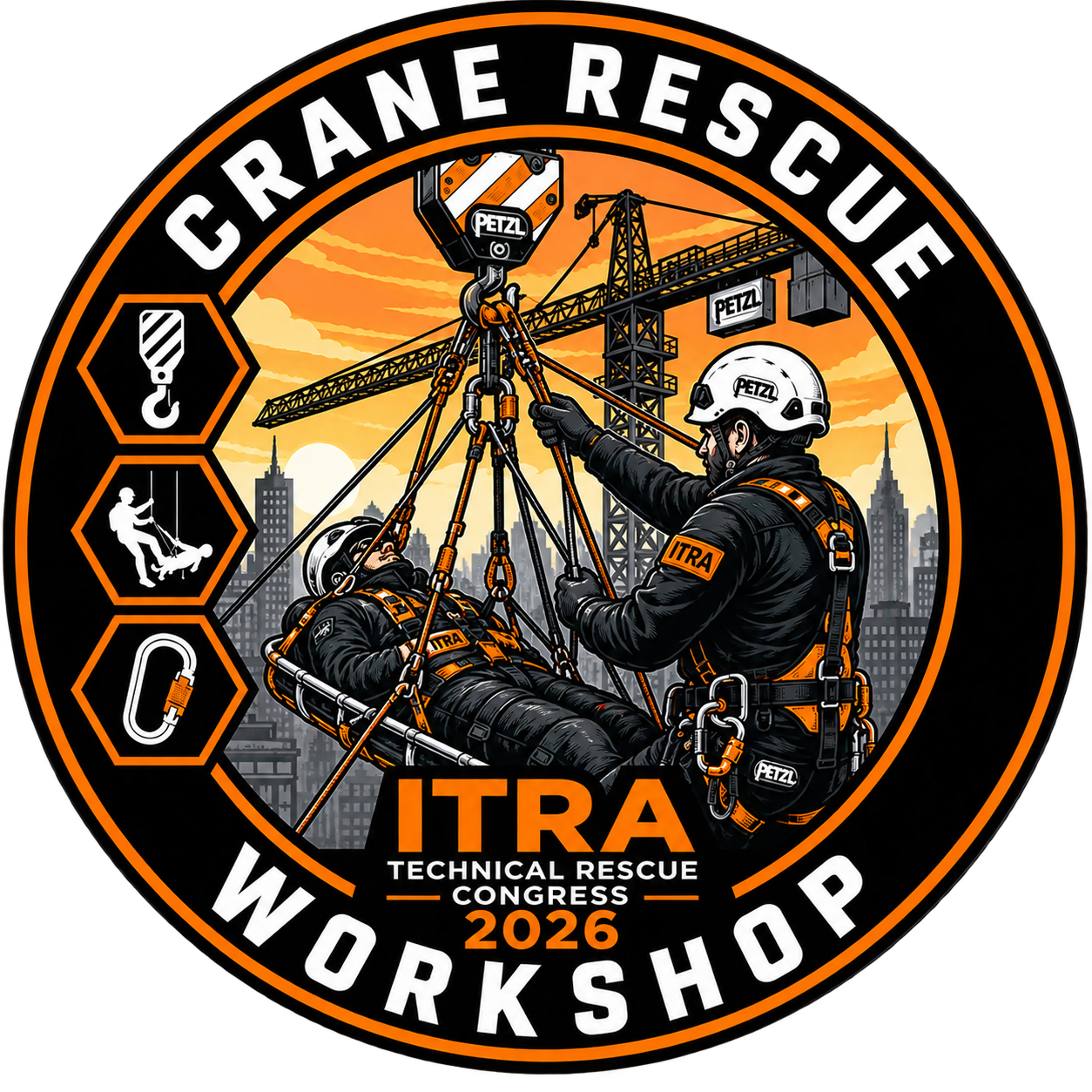
ITRA Technical Rescue Congress 2026
A realistic tower crane rescue workshop focused on planning, rope access, casualty management and evacuation in a complex work-at-height environment.
Workshop Organizer
Organized by Outside Academy with the support of Bombeiros Voluntários de Esposende and Petzl.
This workshop brings together technical rope rescue, work-at-height operations and casualty management in one of the most demanding industrial rescue environments: the tower crane.
Participants will work through realistic rescue scenarios, from initial risk assessment and energy isolation to access, stabilization, rescue system configuration and casualty evacuation.
Workshop Partners
The workshop is supported by Bombeiros Voluntários de Esposende and Petzl, combining operational rescue experience with professional equipment and technical solutions for rescue at height.
Supporting the workshop with operational personnel and experience in emergency response and technical rescue.
Supporting the workshop with professional equipment and technical solutions for rope access and rescue in vertical environments.
About the Workshop
The objective of the workshop is to develop the ability of a rescue team to plan, organize and execute rescue operations on a tower crane, using rope access techniques while maintaining continuous protection for both rescuers and casualties.
Identify operational hazards, isolate energy sources and establish safe conditions before entering the crane rescue environment.
Plan safe access to the tower, cabin, jib and crane structure while maintaining continuous protection against falls.
Select and configure anchors, ropes and evacuation systems suitable for the casualty position and rescue strategy.
Apply clear command structures, communications, STOP criteria, GO / NO-GO decisions and operational hold points.
Rescue Scenarios
The workshop is built around three distinct emergency situations, requiring participants to adapt their rescue strategy to the casualty, location and operational conditions.
Respond to a casualty in cardiac arrest inside the crane cabin, integrating rapid access, casualty management and evacuation planning in a confined working area.
Manage a casualty with traumatic amputation and severe hemorrhage located on the crane jib, requiring medical priorities to be integrated into the technical rescue plan.
Stabilize, package and evacuate a polytraumatized casualty positioned within the crane structure.
Each scenario begins with a briefing and GO / NO-GO verification and concludes with a structured debriefing covering safety, response time, communication and opportunities for improvement.
Operational Planning
Tower crane rescue requires more than rope techniques. Participants must understand the crane itself, control the work environment and continuously evaluate whether the operation can safely continue.
The workshop will address crane rotation, free slew condition, weather, exclusion zones, falling objects, moving mechanisms, communications and the interaction between the rescue team, command and medical support.
Contingency Planning
Participants will be challenged to prepare alternative strategies and respond to changing conditions during the rescue operation.
Define the primary rescue strategy and confirm that all critical conditions are in place before committing the team.
Prepare an alternative rescue route or system before the primary strategy becomes unavailable.
Respond to equipment failure, weather changes, loss of communications or changes in the casualty condition.
Consider how the team will respond if one of the rescuers becomes a casualty during the operation.
Workshop Format
The workshop is designed around practical scenarios involving rope access, rescue systems, casualty management and operational decision-making.
Participants will work as part of a coordinated rescue team and experience the different roles required to safely manage an emergency on a tower crane.
Participant Information
The workshop is designed for participants with an intermediate technical level and basic knowledge of rope access.
The technical equipment required for the workshop will be provided by the organization.
Participants will operate as part of a structured rescue team with clearly defined roles and responsibilities.
The scenarios include medical simulation and require technical rescue decisions to be coordinated with casualty priorities.
Safety
The primary identified hazard is falling from height.
The workshop requires a specific risk assessment and includes control measures for energy isolation, crane movement, weather, falling objects, rope protection, moving mechanisms and rescue system integrity.
Critical Safety Controls
Isolate, lock and verify crane energy sources before beginning rescue operations.
Monitor wind, gusts, rain, thunderstorms and visibility throughout the operation.
Maintain continuous fall protection, secure tools and establish an exclusion zone below the operation.
Any team member may immediately stop an operation if an unsafe condition is identified.
Workshop Location
Practical tower crane rescue environment.
The workshop will take place in Esposende, in a dedicated tower crane environment, with the support of Bombeiros Voluntários de Esposende.
View on the MapWorkshop Availability
Rescue operations involving the crane cabin and jib will only take place when weather conditions permit safe execution.
Workshop Team
The workshop will be coordinated by João Guedes with a dedicated technical rescue team.
The team will guide participants through the different phases of the crane rescue operation, including access, rigging, casualty management, evacuation and debriefing.
ITRA Technical Rescue Congress 2026
Experience an integrated tower crane rescue operation where technical rescue, casualty management and operational decision-making work together.